The iCST Dementia
Interactive Online Training
Frequently asked questions
-
iCST is an evidence-based intervention providing enjoyable, mentally stimulating activities for people with dementia. It helps keep their minds active, promotes meaningful engagement, strengthens the caregiving relationship, and enhances carers’ well-being.
-
This course is suitable for carers of people living with dementia, healthcare professionals, and anyone interested in delivering iCST. No prior experience with iCST is required.
-
Translate iCST theory and evidence into practice
Apply key iCST principles in sessions
Use iCST techniques to build connection and stimulate cognition
Deliver iCST effectively to people living with dementia
Develop problem solving strategies to integrate iCST into daily care routines

-
The course is delivered online, combining trainer-led instruction with learner-centred activities such as: • Interactive discussions • Role play • Video observations • Practical exercises
-
The training is led by Dr. Phuong Leung, senior dementia researcher and educator. With a PhD in Psychiatry focusing on the development and evaluation of iCST, she specialises in cognitive and psychosocial interventions for people with dementia and their carers
-
The training is delivered in one full day (approx. 6–6.30 hours) online. Breaks are included to ensure a comfortable learning experience.

-
Classes are small, with 2–12 participants, ensuring interactive learning, personalised feedback, and opportunities to ask questions.
-
Yes. All participants will receive a Continuing Professional Development (CPD)-accredited certificate upon completion, which can contribute to professional development requirements
-
Participants need: • A computer, laptop, or tablet with internet access • A working webcam and microphone for interactive sessions • Access to a quiet space for uninterrupted learning
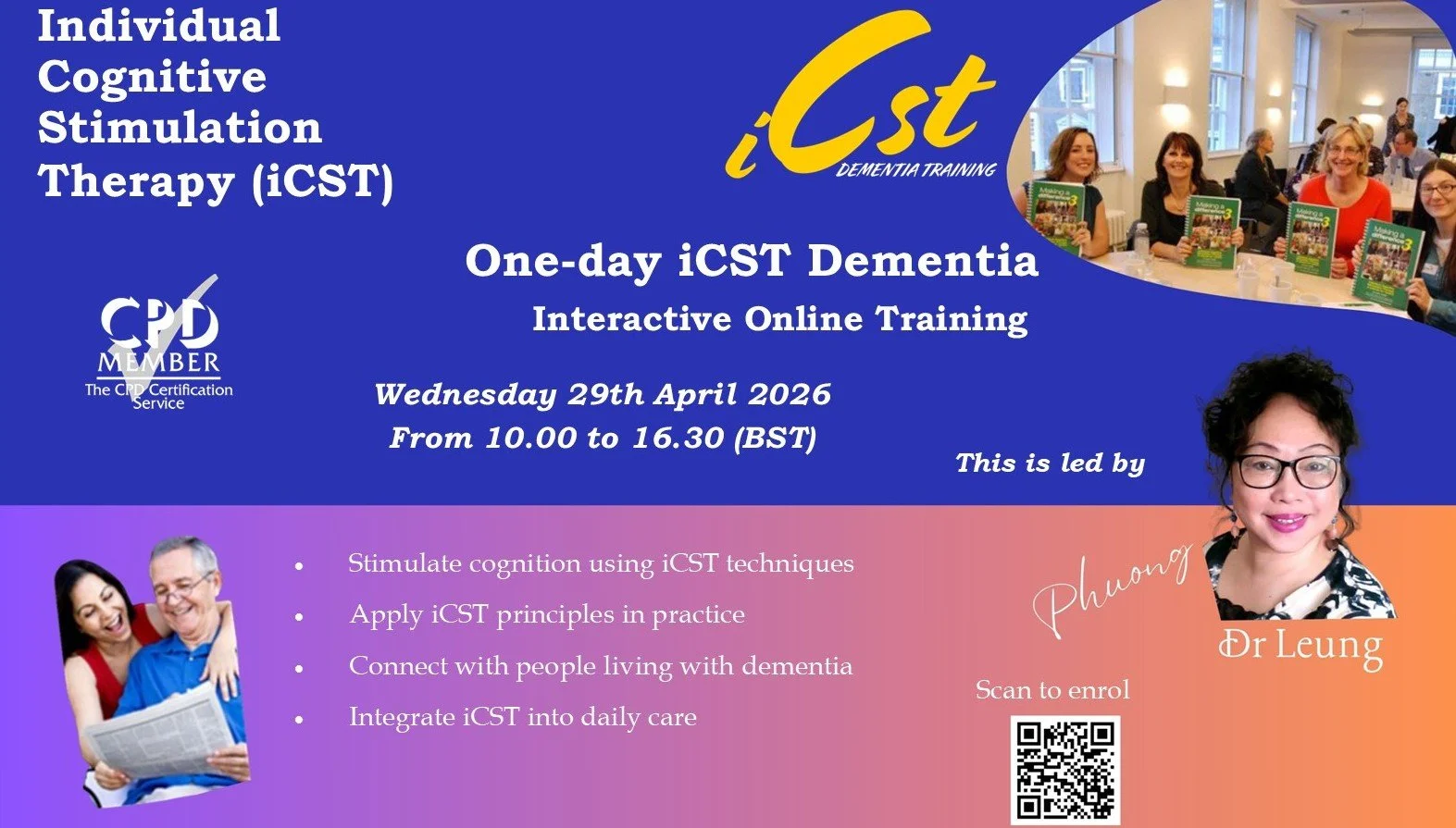
Join this dynamic, evidence-based iCST Dementia Interactive Online Training designed to translate theory and research into clinical practice. This training will equip delegates with practical skills to deliver individual Cognitive Stimulation Therapy (iCST) and integrate it into daily dementia care.
The session is led by Dr. Phuong Leung, a senior dementia educator and research fellow with extensive experience in iCST training and implementation.
Transformative Dementia Care: Evidence-based Cognitive, Psychosocial Approaches & Leadership Skills
One-day Interactive Online Training
This advanced, interactive online training empowers health and social care professionals to deliver high-quality, person-centred dementia care with greater competence, confidence, and reflective insight.
Participants learn to turn evidence-based cognitive and psychosocial theories into practical strategies they can apply in real-world settings.
Through expert-led teaching, interactive discussions, and hands-on learning, the programme not only enhances outcomes for people living with dementia and their carers but also strengthens professional leadership and practice development.
-
This programme focuses on equipping professionals with the knowledge, skills, and leadership to deliver high-quality, person-centred dementia care across all stages of the condition.. Grounded in established theories and international research, the training bridges practical skills, clinical reasoning, and leadership development, preparing professionals to make a meaningful impact in social care, voluntary, private, and international settings.
-
Support people with dementia to maintain social presence and continuity of identity.
Apply non-drug strategies for neuropsychiatric symptoms
Communicate effectively across all dementia stages
Strengthen carer resilience and support
Lead reflective practice and service improvement
-
Yes. A key component of the programme is understanding caregiving stress, including factors that impact carers’ wellbeing and the mediating role of coping strategies and social support for both professional and family carers.

-
Support social engagement and continued social presence
Recognise stressors affecting carers and apply coping and support strategies
Identify neuropsychiatric symptoms and understand their impact
Use advanced communication techniques to manage distress and behaviours
Develop problem-solving strategies for managing NPS in clinical settings
-
This is designed for health and social care professionals working with people living with dementia, including nurses, care workers, allied health professionals, and those supporting family carers. It is most suitable for participants with prior knowledge or experience in dementia care.
-
The training is delivered by Dr. Phuong Leung, senior dementia researcher and educator, with a PhD in Psychiatry and specialist expertise in cognitive and psychosocial interventions,
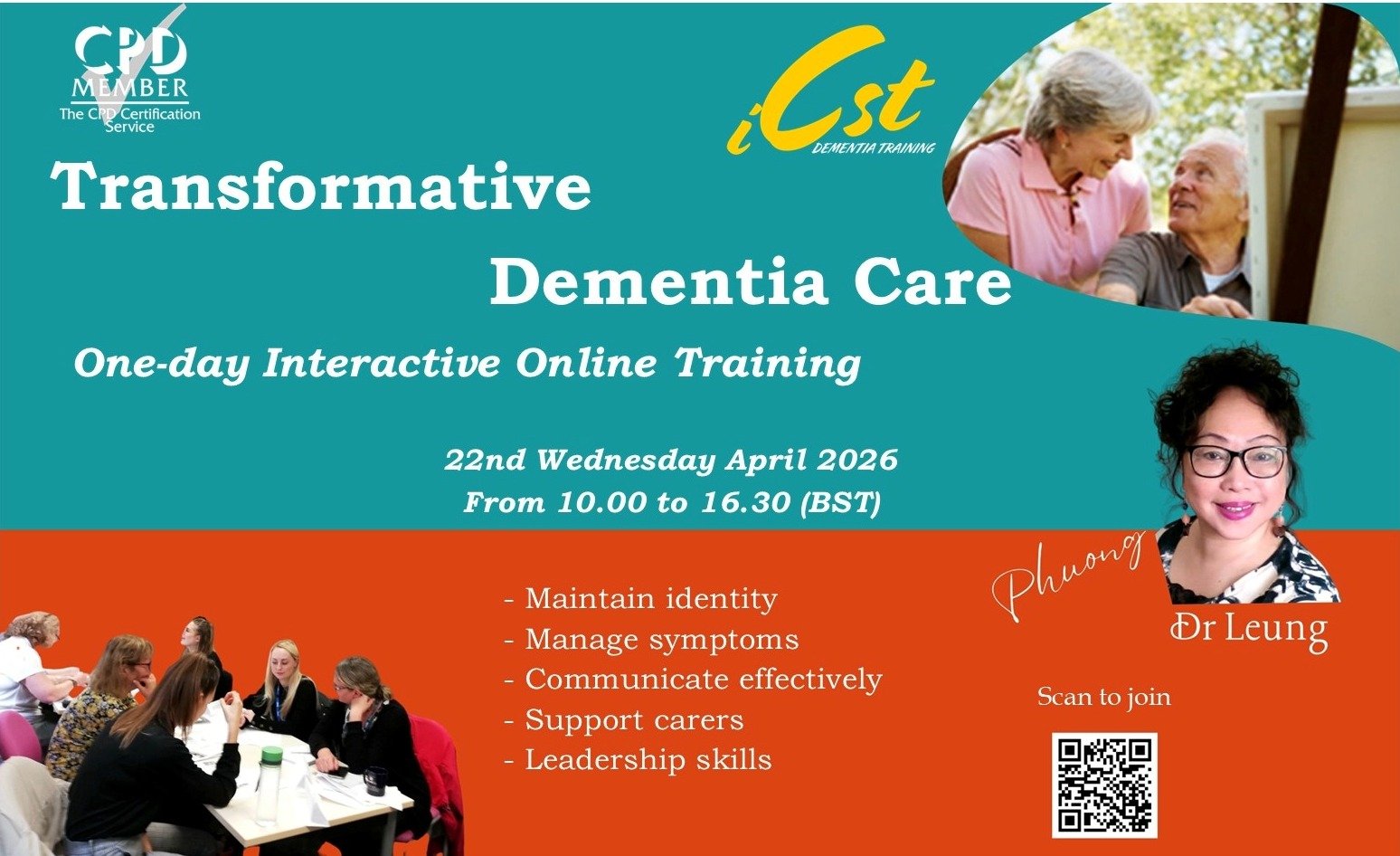
Join the Transformative Dementia Care Interactive Online Training to translate research evidence into practical skills for supporting people with dementia, maintaining identity, managing symptoms without drugs, and strengthening carer support. Learn to communicate effectively across all stages and lead reflective practice and service improvement.
Led by Dr Phuong Leung, a senior dementia educator and research fellow with expertise in dementia care, teaching, leadership, and consultancy.